Graciano plots

Graciano plots

Freshness, concentration and power

VINTAGE

2021

varieties

100% Graciano.

production

1,900 bottles.

winemaking

Harvested by hand in small boxes of ten kilograms capacity. Cooling in a cold chamber until the temperature of the grapes reaches 3 ºC. Double selection of bunches and berries, with gentle destemming and crushing. Separate vinification of the El Tablar de Zorraquín and El Cerrado plots. Gravity vatting in French oak vats with no pumping over. Cold maceration and fermentation for 22 days with indigenous yeasts. Gravity racking into new and second year French oak barrels for malolactic fermentation.

CRIANZA

18 months in these barrels of different cooperages, toasting and origins, without racking, remaining on its lees until bottling, with periodic batônnage during the first four months. The wine is bottled without filtering or fining, so small precipitations of natural origin may appear over time.

the bottle

Our bottle is inspired by an original 18th century bottle that can be visited at the Vivanco Museum of Wine Culture.

THE ZORRAQUIN BOARD AND THE CLOSED ONE
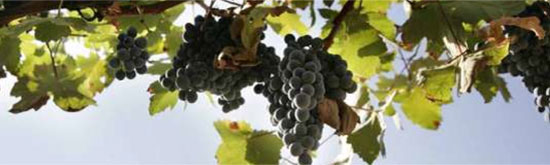
While 2020 will go down in history for the pandemic and the challenge it posed to humanity, 2021 will be remembered for the last great winter storm on record: Filomena. A historic snowfall between 6 and 9 January 2021 that hydrated the earth as had not been seen for years. Spring was again wet, especially in the Tudelilla area, with over 100 litres of rainfall from April to May. A very different summer, with a cold and dry July, continued to delay the vine cycle, followed by an ideal August (heat and cool nights) to achieve harvest dates in October, almost from another era.

The Graciano reached unprecedented levels, with an enveloping and profound fruitiness, offering a wine to remember. The El Cerrado plot was harvested on October 18th and the La Ladera de Zorraquín plot on the 12th.

CATA

Deep violet colour with a very high robe, almost opaque. Intense aromas of ripe black fruits (blackberries, plums) over a large amount of floral aromas (violets), chocolate, menthol. On the palate it is very balanced, with ripe black fruit, fresh, and a very long, complex and persistent finish.

PAIRING

Red beef, venison loins with chocolate sauce, foie gras with blackberry jam.

26/06/2026


The winery will limit its capacity to just 180 people to offer a unique day that fuses astronomy, wine culture, live music, and a six-course paired lunch.

Guided tours of the Museum and Winery will be redesigned with an astronomical and biodynamic theme, also featuring the participation of a specialist in Starlight Destination, sustainability, and biodiversity.

Vivanco is preparing to host one of the most anticipated astronomical events of the year with an unprecedented cultural and enological offering. On August 12th, the winery located in Briones will become a suitable location for viewing what will be the first total eclipse visible from the Iberian Peninsula since 1905.

To this end, Vivanco will close its doors to the general public from midday to transform into the setting for a unique day dedicated to the solar eclipse, meticulously designed for a select group of 180 people.

The day will begin at 10:00 am with an opening where regular visitors will have free access to the Vivanco Museum of Wine Culture only until 1:00 pm (with a maximum exit time of 3:00 pm). From that moment on, only those who have purchased the «Eclipse Pack» will be able to access the winery.

An immersive programme: wine, science and stars.

Bodegas Vivanco is proposing a day that will feature a series of activities designed to connect wine, science, and astronomy:

  • Thematic tours The guided tours of the Museum and the Winery will be completely transformed. The usual talks will incorporate elements about astronomical phenomena, the influence of the moon on cultivation, and the fundamentals of biodynamics. Each of the two tours will include a tasting of two wines.
  • Expert disclosure Susana Gómez Urizarna, Manager of the La Rioja Biosphere Reserve, will give an educational talk on the eclipse, Starlight Destinations, light pollution, and biodiversity, which will be accompanied by a glass of sparkling wine.


Gastronomy for an eclipse night.

The gastronomic offering will consist of a fixed six-course lunch, paired with Vivanco's high-end wines, with options adapted for both adults and a specific menu for children and young people.

Sunset with soundtrack and observation area.

For the peak moment of the day, Vivanco will adapt its gardens to ensure maximum comfort for attendees. The atmosphere will be enhanced between 6:00 PM and 8:30 PM by live music from the renowned saxophonist Jorge Arnedo, who will fuse jazz, bossa nova, and electronic rhythms. Furthermore, guests will have at their disposal a chocolate bar during the afternoon.

The organisation would like to remind you of a fundamental detail regarding safety: Each participant must provide their own eye or sun protection device. approved to observe the eclipse.

Exclusive sale and priority access.

Tickets for this event will only be available for purchase via the winery's website and until full capacity is reached.

How to experience the solar eclipse in Vivanco.

Vivanco has adapted different proposals according to age groups so that the experience can be tailored to all audiences:

For audiences aged 18 and over.

Entry valued at £170 which includes:

  • Guided tour of the winery including a tasting of two wines
  • Guided tour of the Museum, including a tasting of two wines
  • Talk by Susana Gómez Urizarna, Manager of the Biosphere Reserve of La Rioja, on the eclipse, the Starlight destination in La Rioja and sustainability for the preservation of the night skies.
  • Meal (1:30 pm or 3:15 pm) in the panoramic restaurant of the winery overlooking vineyards, paired with premium wines from the Vivanco winery
  • From 18:00 until the solar event concludes at 20:30, live music from saxophonist Jorge Arnedo.


For a younger audience aged 12 to 17.

Valued at 120€ which includes:

  • Guided tour of the winery including a tasting of grape juice
  • Guided tour of the museum including must tasting
  • Talk by Susana Gómez Urizarna, Manager of the Biosphere Reserve of La Rioja, on the eclipse, the Starlight destination in La Rioja and sustainability for the preservation of the night skies.
  • Meal (13:30 or 15:15) at the panoramic restaurant of the winery overlooking vineyards, adapted for a children's menu
  • From 18:00 until the end of the solar event at 20:30, live music from saxophonist Jorge Arnedo.


For the little ones at home, aged between 3 and 11 years.

Valued at £90 which includes:

  • Guided tour of the winery including a tasting of grape juice
  • Guided tour of the museum including must tasting
  • Chat with Susana Gómez Urizarna, Manager of the La Rioja Biosphere Reserve, about the eclipse, the Starlight destination in La Rioja and sustainability for the preservation of the night sky, accompanied by a grape lollipop.
  • Meal (13:30 and 15:15) at the panoramic restaurant of the winery overlooking the vineyards, adapted for a children's menu.
  • From 18:00 until the end of the solar event at 20:30, live music from saxophonist Jorge Arnedo.


21/05/2026


A unique, guided visit inspired by the steps taken by the Vivanco Family in their Briones project, with limited access, allowing entry to restricted and non-visitable areas of the museum and winery, featuring a premium tasting and a tour among the vineyards.

  • Exclusive 4-hour experience to discover normally inaccessible areas of the Vivanco Museum of Wine Culture and cellar, including cataloguing and restoration areas.
  • The visit includes a walk through the vineyard, a tasting of high-end wines with gourmet pairings, following the historical steps taken by the Vivanco Family since they launched their project.
  • Premium activity with limited spaces (2 to 10 people), available in Spanish and English, for €280 per person with a minimum pre-booking of 15 days.


Briones, 21 May 2026 – Vivanco Cultura de Vino presents “Discover the Secrets of Vivanco”, a new wine tourism experience designed to show visitors what usually remains hidden from the public: unique spaces, singular pieces, and the work behind one of the world's most renowned cultural wine collections.

The proposal offers an exclusive immersion into the Vivanco universe through a personalised four-hour visit during which attendees can gain firsthand insight into the museum's collection building process, the cataloguing and restoration work of historical pieces, and the details that make each object part of a unique legacy linked to wine culture.

The experience begins with a welcome of sparkling wine and continues with a guided tour of the museum and areas usually not accessible to the public. Visitors will also be able to stroll through the vineyard and enjoy a high-end wine pairing accompanied by gourmet appetizers in a privileged setting.

The tour concludes in the winery, one of the most special spaces in the Vivanco project, where some of Rioja's most innovative wines are born. An experience designed to thrill, surprise and bring visitors closer to the most authentic essence of wine culture.

Whenever the schedule permits, the visit will be personally led by Santiago Vivanco, offering a unique and intimate insight into the project's history, philosophy, and evolution. When this is not possible, the visit will be guided by one of the project's area managers.

The activity is priced at €280 per person, is available in Spanish and English, and has limited spaces for small groups of 2 to 10 people.

The experience includes:

  • Welcome with sparkling Vivanco Cuvée Inédita Reserva Extra Brut
  • Museum visit
  • Access to the cataloguing and restoration space
  • Vineyard walk
  • High-end wine pairings from Bodegas Vivanco with gourmet appetisers
  • Visit to the winery


Bookings must be made upon request with a minimum of 15 days' notice, by emailing reservas@vivancoculturadevino.es.

The experience can now be booked on Vivanco Cultura de Vino's official platform and on Spain Through Its Wineries.

10/04/2026


  • This exhibition is the product of an agreement signed by the Vivanco Museum of Wine Culture and the Illustrious City Council of Elche. 
  • A compendium of archaeological work, graphics, engravings, paintings, and tapestries, comprising a total of 48 pieces. 41 of these have been lent by the Vivanco Museum of Wine Culture, and 7 have been contributed by the MAHE itself.


  • A tribute to Dionysus and the role he has played throughout the history of wine culture, being the vehicular inspiration for wine itself as a symbolic and cultural element since the dawn of civilisation. Here you will find a review of his figure through different artistic expressions ranging from archaeology itself to graphic works by Dalí or Picasso, including engravings and paintings from the Renaissance and Baroque periods.


“For Vivanco, it is an honour to be part of this exhibition with which we want to continue conveying the culture of wine and teach the importance of wine for humankind”. Santi Vivanco, Director of the Vivanco Foundation and Experiences

Briones, 10 April 2026.  The Vivanco Foundation has inaugurated the exhibition this Friday The Footprint of Dionysus at the Museum of Archaeology and History of Elche (MAHE), a collaboration with the Elche City Council showcasing a total of 48 pieces, with 41 of them loaned from the Vivanco Museum of Wine Culture and 7 contributed by the MAHE itself (all archaeological).

The exhibition will be open from 10 April to 11 October 2026 in the MAHE Temporary Exhibition Hall, Monday to Saturdays from 10:00 to 18:00 and Sundays and public holidays from 10:00 to 15:00. Admission is free.

The commissioners, Santiago Vivanco Sáenz and Miguel F. Pérez Blasco, museum director of Elche City Council and Doctor of History, specialising in Iberian Culture, have wished to pay homage to Dionysus and the role he has played throughout the history of wine culture.

The total of pieces, comprising archaeological works, graphics, engravings, paintings, and tapestries, seeks to pay homage to Dionysus and the role he has played throughout the history of wine culture, serving as the vehicular inspiration for wine itself as a symbolic and cultural element from the dawn of civilisation to the present day.

Greek mythology had Dionysus as the god of wine, adopted by the Romans with the name of Bacchus and identified with their god Liber Pater. Originally he was a god of vegetation to whom the invention of wine and the spread of its use throughout the world were attributed, accompanied by Silenus. He protected fertility and awakened erotic desire.

The Vivanco Museum of Wine Culture and the Illustrious City Council of Elche have agreed to organise this joint exhibition featuring works and pieces from both museums“ collections. ”The MAHE contacted our museum and told us they would love to collaborate with us and our wine collection to continue sharing wine culture and celebrating Elche's wine identity from antiquity," explained Santiago Vivanco this morning during the presentation.

Over the last eight thousand years, wine has accompanied the development of humanity as a foodstuff, symbol, and cultural element. From the earliest agricultural civilisations, cultivating the vine meant settling in a territory, caring for the land, and waiting for the seasons to pass. Thus, agricultural work became culture.

The Footprint of Dionysus reviews the figure of Dionysus and Bacchus through different artistic expressions ranging from archaeology itself to graphic works by Dalí or Picasso, including engravings and paintings from the Renaissance and Baroque periods.

The Councillor for Culture, Irene Ruiz, has highlighted the relevance of this new exhibition for consolidating the MAHE and the Altamira Palace as top-tier cultural landmarks. “It is one of the most important exhibitions we have hosted and it continues to position these halls as a space of cultural reference in our municipality,” she stated.

The Mayor, Pablo Ruz, has highlighted the scale of the exhibition and the quality of the works on display. “We are talking about a major exhibition, with original works by Picasso and Dalí, as well as important archaeological and artistic pieces that make this proposal a great cultural and tourist attraction for the city,” he stated.

Wine as religious value and as sacred food

Among the 41 works donated by the Vivanco Museum of Wine Culture is a selection of 16 pieces from its archaeological collection, featuring items from Mesopotamian, Egyptian, Greek, and Roman periods. To these are added 7 pieces from the MAHE related to the field and culture of wine.

The rest of the pieces are part of the art collection of the Vivanco Museum, where, as Santiago Vivanco himself explains, “we include modern works by Picasso, Dalí and Walt Disney, which allows us to see how that mythology has endured over time”. Works by Annibale Carracci, Andrea Mantegna, Giulio Romano, José de Ribera, Manuel Benedito and Eduardo Rosales are exhibited, in addition to Salvador Dalí and four works by Picasso.


All you need to know

The Footprint of Dionysus

From 10 April to 11 October 2026

Temporary Exhibition Hall of the MAHE. Altamira Palace.

Diagonal del Palau, no number, Elche.

From Monday to Saturday, 10:00 AM to 6:00 PM.

Sundays and bank holidays from 10.00 to 15.00.

Free entry.

12/02/2026

The exhibition showcases more than thirty Cubist works belonging to the Wine Culture Museum and can be visited at the Rioja Culture Centre (during the CCR's opening hours, Monday to Sunday) from this month until February 2028.

“We've been collecting art and objects related to wine for over 50 years.

This is the first time globally that a major exhibition has paired wine and Cubism. And being able to display it at the Rioja Culture Centre fills the Vivanco family with satisfaction, as we feel profoundly connected to Rioja, to Logroño, and are passionate about wine and its culture.”, declare Santiago Vivanco, director of the Vivanco Foundation and exhibition curator.

This morning, the Vivanco Foundation presented the exhibition at the Rioja Culture Centre “Wine as a Pretext in Cubism” Cubist Works from the Vivanco Collection, a collaboration with the Logroño City Council that showcases more than thirty Cubist works from its rich collection, mostly exhibited at the Vivanco Museum of Wine Culture in Briones, La Rioja. The exhibition, open until February 2028, can be visited during the CCR's opening hours, Monday to Sunday.

The inauguration was attended by the Mayor of Logroño, Conrado Escobar; the Councillor for City Promotion, Miguel Sáinz; and the exhibition curator and director of the Vivanco Foundation, Santiago Vivanco, who guided attendees through the exhibition. The inauguration also featured the Swiss artist Willy L’Eplattenier, nicknamed by critics “the last Cubist painter,” whose works are on display at the exhibition. 

This is the first time worldwide that a major exhibition has been held to pair wine and Cubism.

Available from today until December 2028, works by the three creators of the Cubist style, Picasso, Gris, and Braque, can be seen. In addition to other works by Cubists such as Serge Ferat, with a previously unseen oil painting, Emile Filla, Ismael González de la Serna, and Eusebio Sempere with later Cubist influences, or the great Willy L’Epplatenier, known as “the last Cubist”. “So far, I haven’t found any record of an exhibition like this. Cubism is the first great avant-garde movement that breaks with the art that had been produced since the Renaissance; it is the first break and the first avant-garde as such,” stated Santiago Vivanco.

The exhibition's name comes from one of Manolo Valdés's works, “Cubism as a Pretext,” from which a rich series of still lifes can also be seen, where wine holds great importance.

The exhibition once again reflects the depth of the Vivanco Foundation's collection and reinforces its work in sharing and disseminating Wine Culture, where it is the leading representative nationally and one of the foremost exponents internationally. This is the sixth collaboration between the Foundation and the CCR, aimed at energising and enhancing Logroño's cultural offering through the Rioja Wine Centre.

Proof of this is the public exhibition, for the first time, of the artwork *Still Life* by the artist Serge Férat (Moscow 1981–Paris, 1958), a prominent figure in Parisian cubism and closely linked to Guillaume Apollinaire and the magazine The Evenings from Paris. Férat's unique trajectory, marked by ruin after the Russian Revolution and the destruction of a large part of his output, makes this painting a piece of special interest to historians and collectors.

The connection between wine and Cubism

Cubism relates to wine, primarily, through still life, where the wine bottle and glasses become objects of study, deconstructed into multiple planes and geometric shapes. Artists such as Georges Braque, Juan Gris, and Pablo Picasso depicted wine in their still lifes, using cubist fragmentation to break down and reinterpret these elements.

Another of the major attractions is the presentation of twenty graphic works reworked by Manolo Valdés (Valencia, 1942), one of the Spanish living artists with the greatest international projection. These pieces, which have up until now been kept in the museum's storage, show wine bottles and glasses, including historic labels from Rioja wineries, and engage with Cubist language from a contemporary perspective.

As Santiago Vivanco explained this morning during the presentation, “wine, as I like to say, has been coexisting with humans for 8,000 years. The fruit of that friendship has given rise to a great culture and with manifestations as beautiful as these works from a crucial moment in art where wine sneaks into artistic works because wine is important to women and men.”. 

“Wine as a Pretext in Cubism” presents:

  • 10 fully Cubist works How Kettle and bunch of grapes of George Braque, Bottle of wine de Juan Gris or Bottle of Wine by Pablo Ruiz Picasso, among others.


  • 21 artworks inspired by Cubism How Bottle, letter and pipe, Bottle Rioja VI from Manolo Valdés, among others.

11/02/2026

BODEGAS VIVANCO STANDS OUT FOR ITS COMMITMENT TO INNOVATION AND NEW RIOJA CATEGORIES IN TIM ATKIN'S 2026 SPECIAL REPORT

Vivanco at Rioja 2026 Special Report Con:

  •  Vivanco Cuvée Inédita Reserva Extra Brut 2021. Rating: 93 and Best Value Sparkling from Rioja.
  • Vivanco La Isla Tinto 2022 Single Vineyard Score: 93
  • Vivanco Collection Vivanco 4 Varietals Sweet Winter 2022 · Score: 93
  • Vivanco Brunes 2022 Village Wine Score: 92
  • Vivanco Blanco Lías Finas 2024 Score: 90


Last night, the report on DOC Rioja was released, presented by Master of Wine (MW) Tim Atkin. This year, he awarded 93 points to three of Bodegas Vivanco's offerings, 92 points to another of their wines, and 90 points to one of their other selections. In addition to the Sparkling Value Wines of the Year A Vivanco Cuvée Inédita Reserva Extra Brut 2021. A report highlighting Rafael Vivanco and his team's commitment to innovation and the development of the new Rioja and its new categories (Quality Sparkling, Single Vineyard, and Village Wine).

“The diversity of La Rioja is truly remarkable, rivaling any other in the world,” highlights MW Tim Atkin in this eleventh edition of his Special Report on Rioja, which, as he states, is the most extensive to date.


Vivanco's Presence in Rioja 2026 Special Report

Below are the comments made about Vivanco's wines. A report on the appellation including valuations of the wine creations and producers that make up this region.

  • Vivanco Cuvée Inédita Reserva Extra Brut 2021 · Score: 93

Rafa Vivanco is one of the leading figures in the burgeoning sparkling wine movement in Rioja. An elegant, crisp and completely dry sparkling wine, made from 45% Maturana Blanca, 30% Tempranillo Blanco, 15% Viura and 10% Chardonnay, with a chalky minerality, fine bubbles, flavours of lemon zest, toast and yellow apple, and a harmonious, well-balanced finish. 2026–31.


  • Vivanco La Isla Tinto 2022 Single Vineyard · Score: 93

La Isla is a separately vinified Tempranillo from Briones, sourced from a 3.12-hectare plot planted near the Ebro river in 1973. With the firm tannins that characterise many 2022 reds, it shows plenty of old-vine concentration, with flavours of damson plum, mint, blackberry and wild herbs, and an elegant finish. 2026-31.


  • Vivanco Colección Vivanco 4 Varietales Dulce de Invierno 2022 · Score: 93

This “winter wine” was actually harvested in January 2023, but is marketed as a 2022 vintage. Made from an original blend of Tempranillo (20%), Graciano (50%), Garnacha and Mazuelo (10%), it is a red wine made from 100% grapes affected by botrytis, with 120 grams of residual sugar, flavours of goji berries, syrup and Turkish delight, and a subtle volatile note. 2026–31.


  • Vivanco Brunes 2022 Vino de Pueblo · Score: 92

Brunes is a blend of 90% Tempranillo and 10% Maturana Tinta from two organically farmed plots in Vivanco’s own vineyard in the village of Briones, where the winery is located. The oak is toasted, but there is more than enough fruit to integrate it, revealing layers of mocha, black cherry, blackberry and green herbs, with a firm finish that makes it suitable for ageing.


  • Vivanco Blanco Lías Finas 2024 · Score: 90

Lías Finas is a three-varietal blend of 50% Viura, 35% Tempranillo Blanco and 15% Maturana Blanca from Briones, in the Rioja Alta, and Tudelilla, in the Rioja Oriental. Herbal, vibrant and refreshing, it offers appealing flavours of grapefruit and elderflower, as well as a good texture derived from the lees. 2026–29.

Furthermore, within the ‘best value’ wines, the British prescriber has awarded Bodegas Vivanco the recognition of Value Wines of the Year in the category of Sparkling (espumoso) by Vivanco Cuvée Inédita Reserva Extra Brut 2021.

These accolades are in addition to the latest awards the winery has recently received, being considered number 24 in the World’s Best Vineyards, moving up seven places and remaining within the top 50 best vineyards in the world 2025, making it one of eight Spanish wineries included in this Top 50.

About Special Report Rioja 2026 by Tim Atkins MW

Based on a three-week research tour, the eleventh Special Report on Rioja is the most extensive to date, with 232 pages and over 75,000 words.

It remains the most extensive, in-depth, and controversial overview of Spain's principal wine region in English. The diversity of La Rioja is truly remarkable, rivaling any other in the world.

Tim's 2026 special report contains 941 wine tasting notes that scored over 90 points, scores for 1,256 wines in addition to Tim's annual ranking of the top 200 wineries and a guide to the best places to eat, drink and stay.

28/01/2026

VIVANCO KICKS OFF THE YEAR'S WINE TOURISM ACTIVITY WITH THE REOPENING OF ITS EXPERIENCES

Vivanco reopens the Vivanco Experiences facilities today, Wednesday 28th January, thus kicking off the wine tourism year. Considered the 24th Best Winery in the World by the World Best Vineyards, the most important classification for wine tourism internationally, it inaugurates the year with all services included in these experiences, with the exception of the restaurant, which is undergoing a renovation.

Vivanco also publishes the calendar detailing the days and times of these activities. In this first quarter, and until April, opening days will be from Wednesday to Sunday, from 10:00 to 15:00, with the exception of Saturdays when Vivanco extends its opening hours from 10:00 to 18:00.

Vivanco Experiences

At Vivanco, wine tourism is much more than just wine: it's culture, history, emotion, and sensory pleasure. The different experiences on offer at the winery range from tours of the winery itself, visits to the Museum of Wine Culture – which forms part of the best wine cultural programmes in the world, recognised by UNESCO-UNWTO in 2007 – tastings, and unique activities within the more than 9,000 m² dedicated to experiencing wine.

These experiences include different formats of Museum and winery visits (guided or unguided) or a variety of tasting courses where you can enter a universe of aromas and flavours with the help of their expert trainers.

Another of the experiences is the Vivanco Barrica Club. A club that allows you to be part of the creation of a unique Reserva wine, selected from limited barrels and unavailable on the market. Members can enjoy unique advantages and create a wine with your own story.

There is also the possibility of organise events at your premises. Vivanco offers versatile spaces for meetings or events. From conference rooms to unique corners such as the octagonal nursery or the French oak vat room. In addition to private dining rooms, terraces and viewpoints that can adapt to any need.

Reservations

Reservations and timetable enquiries can be made on their website.www.vivancoculturadevino.es/reservations) or via telephone 941 322 323 or email reservas@vivancoculturadevino.es. For event organisation, the email is: eventos@vivancoculturadevino.es


WHAT IS VIVANCO?

Vivanco is their family origin. In 2004, the VIVANCO FAMILY decided to make a lifelong dream of enthusiasm and dedication a reality in Briones, La Rioja: to share their passion for the Culture of Wine with the world. With humble origins from the vineyard, wine has been the vital axis of the family for four generations and 100 years of work and commitment. With a pioneering spirit and boundless enthusiasm, it was time to share this vocation by giving back to wine all that wine had given them.

Vivanco is much more than wine. A WINERY where wine is understood from a demanding, dynamic and contemporary perspective. A contemporary oenological project with different and unique wines, from the family's vineyards. The authentic expression of a land full of curiosities.

Vivanco is much more than just Culture. A FOUNDATION where past and present become one. An exciting journey through knowledge and history, with a unique Museum where the essence of wine is discovered through experience, sensitivity, and innovation.

Vivanco is much more than Experiences. Vivanco wants to transport the wine lover to a new universe of sensations where the wine itself takes centre stage. A new form of ENOTOURISM with more than 9,000 m² of emotions and activities around culture, art, gastronomy, flavour and fun. The meeting point between knowledge and enjoyment of wine.

Today, Vivanco understands wine as a way of life from an innovative and energetic perspective, offering a unique and exclusive experience around Wine Culture. Winery, Foundation, and Experiences are the true reflection of the Vivanco Family's commitment to “give back to wine what wine has given them”.

Recently ranked the 24th best winery in the World's Best Vineyards, the winery located in Briones has climbed seven places and remains within the Top 50 Best Vineyards in the World 2025. It is one of eight Spanish wineries included in this Top 50.

SINGULAR VARIETIES

Sultana

Location: It is one of the most widespread varieties in the world. It probably originates from Afghanistan. It is also grown in Turkey, Iran, California (USA), Greece, Australia, Chile, South Africa, Russia, Syria, China, Lebanon, Argentina, Mexico, Morocco, Spain, Israel, Pakistan, Algeria, Libya, Tunisia, Yemen, Italy, Portugal, Romania, and Oman.

Synonyms: White raisins, Kandahar raisins (Afghanistan); White raisins (Romania); White oval raisins (Russia); White sultana (Greece and Cyprus); Seedless (Turkey); Seedless white (Bulgaria); White sultana, sultana grape, kishmish (Hungary); Thompson seedless (USA, South Africa and Australia); Banati, Roumined (Egypt); White kechmish, Rhodes acorn, Crete sultana (Greece).

Description and aptitude: Its leaf is orbicular in shape, light green, shiny, pentagonal-lobed, and glabrous on both sides. The cluster is large, loose, fairly branched, and short-conical in shape. The berries are small, elliptical or ovoid, white, and contain rudimentary seeds. It is sensitive to powdery mildew and downy mildew, so it performs better on dry soils.

Characteristics: A highly useful variety. Its fresh consumption is very pleasant, both in taste and texture. In Arab countries, it is mainly used to produce raisins, a highly energetic food due to its concentrated sugar content. It is also used for winemaking purposes, mainly in California (USA). It normally produces fairly neutral wines. This variety is more interesting for producing wine alcohol intended for distillation.

SINGULAR VARIETIES

Cow's udder

Synonyms: Royal Gordo (Madrid).

Description and aptitude: Medium-sized, trilobed leaf, with hairiness on both sides. The cluster is medium-sized, cylindrical, and loose. The berries are very large, truncated-ovoid, pink in colour, and contain very elongated seeds. Late ripening.

Characteristics: Table grape.

VITACEAES

Parthenocissus Quinquefolia

Common name: Parra virgen or partenocisus.

Habitat: Well-drained soils. Often grows on large trees.

Location: Native to the U.S. state of Virginia, it is fairly widespread due to its ornamental value.

Plant characteristics: Leaf deeply divided with five leaflets, turning a very characteristic reddish colour in autumn. Forked tendrils. Small clusters of 5 to 12 berries, black in colour and with an unusual flavour. Very vigorous plant and excellent climber.

Suitability (Tolerances): Resistant to low temperatures. Tolerates drought.

Use: Gardening.

Virginia creeper

ROOTSTOCKS

110 Richter

Cross: Vitis berlandieri x Vitis rupestris.

Skills It is one of the most widely used rootstocks in Spain. Its resistance to phylloxera is good. It has some issues with nematodes. Its performance on calcareous soils is acceptable. It withstands drought well. It does not tolerate permanently wet subsoil. It has few problems in compact soils. It is quite sensitive to salinity. Its vigour is pronounced.

HYBRIDS

Villard Blanc

Origin: Geilweilerhof Institute in Siebeldingen (Germany), a cross between 6468 Seibel and 6905 Seibel. Third period.

Synonyms 12.375 Seyve-Villard.

Description and aptitude: Vigorous plant. Medium-sized, shiny leaves. Large fruits, with notably sized seeds and golden-yellow colour. It resists downy mildew well, but is somewhat sensitive to powdery mildew.

Characteristics: This plant has been one of the most widely used producing hybrids, although it is now obsolete. It yields a young wine with dull colour and slightly bitter taste, not very suitable for quality wine production. It has also been used as a parent for the development of other varieties.

Vines

Vitis Labrusca

Habitat: Humid forests.

Location: From New England to Georgia.

Plant characteristics: Medium-sized clusters, with medium to large berries of blue-black colour and unusual flavour. The pulp separates very easily from the skin.

Suitability (Tolerances): Not very resistant to phylloxera, without galls on the leaves. Tolerates powdery mildew, but has some issues with downy mildew. Sensitive to botrytis. Responds poorly to drought. Difficult to root.

Use: Its Concord and Isabella varieties are widely grown as table grapes and also for winemaking, although their wines are not highly regarded.

Vitis labrusca

VARIETIES OF THE WORLD

Merlot

Origin: France.

Synonyms: Crabutet noir, plant Médoc, bigney rouge, plan Médoc, plant du fleuve, sémillon rouge, vitraelle, Alicante (France).

Location: France, Italy, Slovenia, Hungary, Romania, Bulgaria, Spain, Argentina, United States, Australia, South Africa.

Description and aptitude: The leaves are medium-sized, cuneiform, with shallow lateral sinuses, a dark green face and a spidery underside. The cluster is medium-sized and loose with an elongated conical shape. The berries are small, spherical and blue-black. It is a moderately vigorous plant with an upright habit, medium-budding, canes with short internodes and a balanced canopy as a whole. It is sensitive to downy mildew and grey rot.

Characteristics: It produces a very fine, intense ruby-red wine that is quite alcoholic with a lightly herbaceous flavour. Jammy aromas dominate and it usually shows little acidity. Blended with Cabernet can improve its quality.

VARIETIES OF THE WORLD

Malbec

Origin: France.

Synonyms: Pressac, ausserrés, balouzat, ebalouzat, jacobin, oeil, pied de Perdrix, pied noir, claveire noire, beran, tinturin, côt (France).

Location: France, Italy, Spain, Argentina, Chile, Peru, California (USA), New Zealand, Australia, South Africa.

Description and aptitude: The leaves are orbicular and loose, with the edges of the leaf blade rolled, either whole or slightly trilobate and a spidery underside. The berries are spherical and small, bluish-black with a thin skin and soft pulp. It is very sensitive to downy mildew, excoriose and frosts in winter.

Characteristics: Wine made from this variety is rich in colour and tannins, less aromatic and softer than Cabernet wines.

VARIETIES OF THE WORLD

Cabernet Sauvignon

Origin: France.

Synonyms: Carbouet, petit bouschet, bouschet, marchoupet, petit cabernet, petit parde (France); Burdeos tinto (Spain); Kaberne-sovinjon (Russia and Bulgaria); Petit cabernet (Morocco).

Location: France (Anjou, Tourine, Pays, Nantais, Bordeaux, south west area), Spain, Italy, Bulgaria, Greece, Romania, Lebanon, Chile, Argentina, Mexico, California (USA), New Zealand, Australia, South Africa.

Description and aptitude: The vine has an upright growth habit. Leaves are small, orbicular in shape, with very pronounced lateral sinuses and seven lobes, very dark green upper surface, and slightly pubescent underside. The cluster is small, very compact, and short-cylindrical in shape. The berries are small, spherical, with thick, hard skin and deep black pigmentation. The pulp is firm, crunchy, and astringent in taste. It is sensitive to powdery mildew, downy mildew, and eriophyid mite.

Characteristics: Its wines are characterized by dense and aristocratic tannins, deep colour, complex fruity aromas, elegant structure, and suitability for aging. They develop a distinctive range of floral aromas (violet, roses), fruity aromas (blueberries, cassis, raspberries, blackberries), and vegetal aromas (green pepper, raw coffee). These aromas can become more complex with aging, revealing notes of smoke, cedar, incense, licorice, and truffle.

VARIETIES OF THE WORLD

Riesling

Origin: Germany.

Synonyms: Niederländer, Klingelberger (Austria); Petit Rhin (Switzerland); Rhine Riesling (Italy); White Riesling (California, USA).

Location: Germany, Austria, Australia, Bulgaria, Slovakia, Spain, France, Hungary, Italy, Luxembourg, South Africa, Switzerland.

Description and aptitude: The leaves are orbicular, bulging, with ogival teeth and a spidery underside. The clusters are small, cylindrical and compact. The berries are spherical and small, light green or golden yellow. It is of medium vigour. Its fertility is abundant and regular. It is sensitive to powdery mildew and grey rot.

Characteristics: It produces very aromatic, dry wines that age well. It is also used to make late harvest wines from noble rot grapes.

SPANISH VARIETIES

Pedro Ximénez

Designation of Origin: Montilla-Moriles.

Synonyms: Pedro Jiménez, Pedro Ximen, Ximénez (Cádiz, Córdoba, Granada, Huelva and Málaga); Chironés (Alicante).

Other locations: Andalusia, Extremadura, Levante, Canary Islands, and Catalonia in Spain. Argentina, Chile, Australia, South Africa, and New Zealand.

Description and aptitude: Upright growth habit. The leaves are medium-to-large, pentagonal in shape, with marked, deep, lateral sinuses, a green face and a steely underside. The cluster is medium-sized, with an average compactness and an elongated conical shape. The berries are medium-sized, slightly flattened on the ends and golden yellow. The plant is medium-budding and medium-early ripening. It is sensitive to downy mildew, powdery mildew and grey rot.

Characteristics: This grape variety is mainly used for the manufacture of fine, amontillado and oloroso wines. The result is an opaque wine with a concentrated, toasty, raisiny flavour.

SPANISH VARIETIES

Xarel·lo

Designation of Origin: Ampurdán – Costa Brava.

Synonyms: White Cartuja, Cartuxa, Cartoixa, White Pansá, White Xarelo, Xarelo, Moll Xarelo, Pansalet, Vinyater (Barcelona); White Pensal (Palma de Mallorca); Pansal, Viñate (Tarragona).

Other locations: Catalonia. Minor presence in Extremadura, Levante, Andalusia, and the Ebro basin.

Description and aptitude: Native grape variety to Penedès. Trailing growth habit. The leaves are large, pentagonal in shape, with not very marked lateral sinuses, bottle-green face and downy underside. The cluster is small or medium-sized, compact, short and tapered. The berries are medium-sized, spherical and yellowish. Medium-budding and medium-ripening. It is sensitive to downy mildew and powdery mildew.

Characteristics: It is one of the varieties of choice in Catalan wine regions. In sunny, low-altitude areas, its qualitative performance is particularly notable. Its wines have an average alcohol content (11-12%). They are well-balanced, elegant and silky in the mouth.

SPANISH VARIETIES

White wine

Designation of Origin: Rías Baixas.

Synonyms: Alvarinho, white azal.

Other locations: Galicia (Spain) and Portugal.

Description and aptitude: Semi-upright growth habit. The leaves are small in size and almost whole, with very shallow lateral sinuses, a bright green face and an almost glabrous underside. The cluster is small in size, either with double wings or short and tapered. The berries are medium-sized, ovoid, acuminate, yellowish green, with a curious flavour. Early-budding and medium-ripening. It is sensitive to powdery mildew.

Characteristics: It produces exquisite wines that are aromatic and well-balanced with an excellent flavour. They have elegant floral and spicy aromas, and a fresh, glyceric, tasty mouthfeel with a highly nuanced, velvety finish.

SPANISH VARIETIES

White wine

Designation of Origin: Wheel.

Synonyms: verdeja, verdejo/a blanco/a (Oviedo, Segovia, Valladolid and Zamora).

Other locations: Duero region, Toro, Zamora, Asturias, and in the Santander vineyard of Liébana.

Description and aptitude: Trailing growth habit. The leaves are medium-sized, orbicular, with shallow lateral sinuses, a dark green face and glabrous underside. The cluster is small, loose, short and tapered. The berry is small with a short elliptical shape and green. The plant is early-medium budding and ripening. It is very sensitive to powdery mildew. Its excellent adaptation to the environment allows it to resist cold temperatures, extreme heat and droughts.

Characteristics: It is one of the finest Spanish white grapes, of exquisite quality, producing aromatic, full-bodied, and very smooth wines.

SPANISH VARIETIES

Monastrell

Designation of Origin: Bullas.

Synonyms: Alcayata (Albacete), Garrut (Tarragona and Zaragoza), Del reyno (Murcia), Mandó (Palma de Mallorca).

Other locations: Mediterranean Coast.

Description and aptitude: Upright growth habit. The leaves are medium-sized, trilobate, with a woody face and a light green, cottony underside. The cluster is small or medium-sized, very compact, short and tapered. The berries are medium-sized, spherical and blue-black. This plant is medium-budding and late-ripening. It is sensitive to downy mildew, sour rot and powdery mildew.

Characteristics: It produces slightly dry, meaty, alcoholic wines that are highly pigmented, tannic and structured. They are relatively resistant to oxidation, suitable for making rancio and sweet wines. In the Murcia area they produce reds and clarets with an alcohol content between 14% and 18%.

SPANISH VARIETIES

Country Ink

Designation of Origin: Ribera del Duero.

Synonyms: Aragonés (Burgos and Valladolid); Escobera, chinchillana (Badajoz); Tinta roriz, aragonez (Portugal), Tinto fino (Madrid), Tinta de Toro (Zamora), Cencibel (La Mancha), Tinto de Madrid (Toledo, Santander, Salamanca, Soria and Valladolid), Ull de llebre (Barcelona), Tempranillo (La Rioja).

Other locations: Currently, under its various synonyms, it is found throughout almost the entire wine-growing geography of the Iberian Peninsula. It is also cultivated in the French Mediterranean region and in California (USA).

Description and aptitude: Upright-growing vine. Large, pentagonal leaf, with a dark green upper surface and a downy underside. The cluster is medium-sized, very compact and cylindrical in shape, with wings. The berries are medium-sized, spherical and blue-black in colour. Medium-early ripening. It is very sensitive to powdery mildew and somewhat to downy mildew.

Characteristics: It is one of the finest Spanish varieties. Its wines display intense colour, medium acidity and medium to high alcohol levels. Young wines are highly aromatic and elegant. Its best qualities are expressed in aged wines, which show great balance.

29/10/2025

VIVANCO PRESENTS THE EXHIBITION “NEW WORLD ORDER” BY ARTIST ÓSCAR VAUTHERIN

AUTHOR OF THE EXTERIOR WORK OVERLOOKING THE WINERY GARDEN SINCE 2021, “GRACIAS MADRE”

  • “New world order” is born from this first work, already located in the cellar, where the artist thanks nature for the fruits, the vine and the agriculture it provides us, and creates a connection with that which is not permanent and subject to our passage through the world.


  • The exhibition will be open to visitors from this 29th October until next Christmas.


Briones, 29 October 2025. Bodegas Vivanco presents a new temporary exhibition by Óscar Vautherin, the artist behind the outdoor work that presides over the winery's garden. The exhibition “New World Order”, viewable from 29 October until next Christmas,  Gather 7 works by the author that complement the existing body of work. Thank You Mother 2021where the vine, a spring of earth's blood, which imbues with life all it touches, becomes the protagonist of its gaze.

This is how these fauns are conceived, emerging from the heart of the winery to conquer the world. These “tri-legged ones” that ally Earth, plant, and man, laden with intention in motion, plant themselves in the earth like milestones that freeze time and capture the gaze, granting us the time to contemplate and appreciate life.

Alongside Gracias Madre 2021, the exhibition is expanded with the inclusion of:

  • Golgotha 2025, where it claims that when no one is left, the earth will still persist.
  • Mercy 2003, It's a wood carving and large-format photography.
  • No country for old people 2021, made from wood, iron, esparto grass, plaster, paint and cables. It depicts a woman with two children playing at sorting out the trail of wood shavings and fragments on the floor.
  • Ink Drawings 2019-2020, There are 36 drawings of vine strains at different moments and stages of progress. 36 ways of approaching a vine through drawing.
  • Sun Salutation 2023, A proposal that questions how we identify with our ideas and their ephemerality, a society that destroys the values that define the individual to replace them with ideas, much more volatile and inconsequential. 
  • No going back 2024 – 25, It is a piece created on the winery's facade, which will be the most visible of all. It represents a broken European flag that starts from one of the main facades and enters into dialogue with a table on which two trees stand, a parallel with “that dish” that they are forcing us to serve now and that is destroying agriculture.


About Óscar Vautherin Villar

“I have always used art as a vehicle to enable me to communicate, transcending physical borders and cultural differences. My work stems from observing the world and society through deep introspective analysis, which allows me to explore common causes while avoiding anecdote. I make no concessions to aesthetics. The beauty of the work is intrinsic to the nature of its content.

Thus, from its inception, the first street actions and installations emerge. As in didactic 1995, Gijón. Where he explores different degrees of abstraction in the message, while taking on the challenge of creating hyperrealism in his first sculpture.

Trained at the Fine Arts School in Madrid in video editing, where he created his first pieces in this medium in 2000, with «corderos” [lambs], a piece for 4 synchronised projectors that projected from within a square enclosure onto tulle cloths, the image of a flock of sheep broken down into a four-colour process.

Video work and its digital process led me in 2008 to create a series of pieces starting with «memoriam”. It all kinds of media and disciplines are used. The continuity in his work not only carries pieces that he ends up converting into others.

An example of these pieces that are re-adapted or transformed over the years is «En lo bueno y en lo malo» (In Good and Bad) 2019, which was originally part of «Mis 4 horizontes de psiquiátrico» (My 4 Psychiatric Horizons) 1998.

19/11/2025

BODEGAS VIVANCO CLIMBS TO 24TH PLACE IN THE WORLD'S BEST VINEYARDS 2025

  • The 2025 edition of the World's Best Vineyards competition, held today in Margaret River, Western Australia, has ranked Vivanco 24th among the world's best wine tourism destinations. The winery, located in Briones, has climbed seven places and solidified its position among the top 50.
  • Vivanco is one of 8 Spanish wineries included in this Top 50.
  • For the fifth year, Bodegas Vivanco is among the highest rated in this competition.


19 November 2025. Briones, La Rioja. Bodegas Vivanco once again consolidates its position, rising to number 24 in the World’s Best Vineyards. The winery, located in Briones, moves up seven places and remains within the world's top 50 best vineyards for 2025, being one of eight Spanish wineries included in this Top 50.

The organisation refers to Vivanco as “one of the most popular wine tourism destinations in Spain, thanks to its modern white and red wines from La Rioja. They highlight the modern and fresh style in the making of their wines”.

Special mention is given to the Vivanco Museum, “with its modern art gallery (Picasso, Gris, Warhol), history of wine, wine objects and culture, as well as an important collection of corkscrews”. Highlighting that “the experience can be completed with the gastronomic offering of the restaurant and a visit to the winery where the octagonal barrel room is located”.

Santiago Vianco, co-owner and director of the Vivanco Foundation and Experiences, attended the ceremony and highlighted: “It is an honour for our winery to be among the eight Spanish wineries in this Top 50. It is a great recognition for Bodegas Vivanco to be ranked 24th; we will continue to commit to and work towards excellence in wine tourism.

For the fifth year, the Briones winery has been included in this ranking, which was announced at a ceremony held in Margaret River, Western Australia.

Among the recognised projects are the world's best wine tourism destinations, which have been nominated by more than 500 wine and travel experts from around the world, creating a prestigious list spanning all five continents.

William Drew, Content Director for The World’s 50 Best Vineyards, has highlighted that “this year's list highlights the diversity and innovation of vineyards that define the global wine landscape».


WHAT IS VIVANCO?

Vivanco is their family origin. In 2004, the VIVANCO FAMILY decided to make a lifelong dream of enthusiasm and dedication a reality in Briones, La Rioja: to share their passion for the Culture of Wine with the world. With humble origins from the vineyard, wine has been the vital axis of the family for four generations and 100 years of work and commitment. With a pioneering spirit and boundless enthusiasm, it was time to share this vocation by giving back to wine all that wine had given them.

Vivanco is much more than wine. A WINERY where wine is understood from a demanding, dynamic and contemporary perspective. A contemporary oenological project with different and unique wines, from the family's vineyards. The authentic expression of a land full of curiosities.

Vivanco is much more than just Culture. A FOUNDATION where past and present become one. An exciting journey through knowledge and history, with a unique Museum where the essence of wine is discovered through experience, sensitivity, and innovation.

Vivanco is much more than Experiences. Vivanco wants to transport the wine lover to a new universe of sensations where the wine itself takes centre stage. A new form of ENOTOURISM with more than 9,000 m² of emotions and activities around culture, art, gastronomy, flavour and fun. The meeting point between knowledge and enjoyment of wine.

Today, Vivanco understands wine as a way of life from an innovative and energetic perspective, offering a unique and exclusive experience around Wine Culture. Winery, Foundation, and Experiences are the true reflection of the Vivanco Family's commitment to “give back to wine what wine has given them”.

01/12/2025

BODEGAS VIVANCO CELEBRATES CHRISTMAS WITH ITS DOCa RIOJA SPARKLING WINE

  • For this time of year, Bodegas Vivanco is offering its Rioja sparkling wines, Vivanco Cuvée Inédita Reserva Extra Brut, in its two versions, white and rosé. A personal, pioneering, and exclusive project by Rafael Vivanco.
  • Vivanco was one of the first wineries to begin producing quality sparkling wines in the D.O.Ca. Rioja in order to explore and understand the potential of each of Rioja's native grape varieties.
  • Among the winery's proposals for toasting and pairing this festive season, there are also: La Isla Viñedo Singular, in its red and white versions, wines with great personality that showcase the potential of their respective Singular Vineyards and with a great capacity for ageing. And their Colección Vivanco 4 Varietales Dulce de Invierno, a naturally sweet wine perfect as an aperitif or for dessert. 


Briones, 20 December 2025. Bodegas Vivanco, Briones, La Rioja, proposes the perfect pairing for your Christmas meals and dinners. A journey through three of their Finest wine ranges which includes its sparkling DOCa Rioja, Vivanco Cuvée Inédita Reserva Extra Brut, in their white and rosé versions, very gastronomic and versatile wines with which to pair meals from start to finish; their extremely limited Single Vineyard wines, Vivanco La Isla, and Vivanco's Sweet Winter Collection, a naturally sweet wine, perfect for after dinner, inspired by the ancient fortified wines once made in Rioja. 


VIVANCO Cuvée Inédita Reserva Extra Brut.

Sparkling wines with personality, pioneers and unique.

 In 2017, the Regulatory Council of the D.O.Ca. Rioja approved a new category of quality sparkling wine within the denomination. Few wineries embarked on the production of these wines, and among them was Bodegas Vivanco.

A personal, pioneering and unique project with which Rafael Vivanco, technical director of Bodegas Vivanco, wanted to explore the potential of native Riojan grape varieties for the production of this type of wine. Vivanco Cuvée Inédita Reserva Extra Brut, in its two versions, has become a benchmark within the category in the denomination, being recognised by British journalist and wine critic, Tim Atkin, as the Best Wines in the Category in his latest Rioja report.

  • Vivanco Cuvée Inédita Reserva Extra Brut.

ADD 2020

PRODUCTION

13,838 numbered bottles.

 HARVEST

The different grape varieties grown in our vineyard in Briones, Finca La Concepción, were hand-picked into small containers, separately, and at their optimal ripeness, based on grape tasting and analytical data, between the first and second week of September.

Blanc de blancs a pioneer in Rioja and unique for the lively and elegant expression of indigenous varieties after a long bottle maturation.

Pale yellow, vibrant and intense, beginning to show its long bottle maturation. Fine, persistent bubbles. Aromatically, it expresses itself as fresh and complex with the presence of stone fruit, white flowers, citrus, and tertiary notes of dried fruit and brioche bread, all very well integrated. On the palate, the effervescence is present, but caressing with a creamy texture that manifests, once again, that balance between the vibrant acidity of youth and the elegant embrace of maturity. 


  • Vivanco Cuvée Inédita Rosado Reserva Extra Brut

ADD 2020

PRODUCTION

4,633 numbered bottles.

 HARVEST

This is the first time a rosé sparkling wine has been produced using these indigenous red grape varieties from La Rioja – 90% Garnacha Tinta and 10% Mazuelo – grown in the estate’s own vineyards in the Alesón and Briones areas of Rioja Alta. The first sparkling Rosé Reserva of Rioja, pioneer for its elaboration with the autochthonous Rioja red varieties garnacha and mazuelo.

Pale salmon colour showing its long maturation in the bottle. Fine, persistent bubbles.

On the nose, it is fresh and complex, with the presence of red fruits and citrus, and tertiary notes of dried fruits and brioche, all very well integrated. On the palate, the effervescence is present, but with a creamy texture that again shows that balance between vibrant acidity and the elegant embrace of ripeness. 

Both proposals are very gastronomic and versatile wines that can be enjoyed from start to finish with seafood (oysters, scallops, prawns...), sushi, sashimi, foie gras, Iberian ham, Caesar salad, salmon in puff pastry, paella, pasta, roast lamb, squab, baked turbot or monkfish, goat's cheese log, Comté cheese, dark chocolate with olive oil and fleur de sel...

A perfect accompaniment for meals at this time of year.

Sparkling Rioja, a new category

In 2015, the Control Board of the D.O.Ca. Rioja began, for the first time in its history, the process of assessing a possible new category of quality sparkling wine within the appellation. To this end, its technical committee commissioned a team, led by Rafael Vivanco, fourth generation of the family and winemaker at Bodegas Vivanco, to develop and propose its regulations, studying Rioja's potential and the most successful international cases.

Finally, in 2017, the proposal based initially on Champagne (manual harvest, traditional or champenoise method...) but with the personality of the Rioja terroir and grape varieties was approved with great consensus, reinforced in quality even more with lower yields, lower sugar content (only Brut Nature, Extra Brut and Brut), longer maturation on the lees between tirage and disgorgement (minimum months: Generic 15, Reserva 24 and Gran Añada 36), as well as having to pass the finished sparkling wine a demanding tasting by a panel of experts before it can be released on the market.

A Vivanco family project

 The first harvest in which the production of quality sparkling wine was officially authorised in the D.O.Ca. Rioja was in 2017. Very few wineries applied for permission to start the first vinification, being Bodegas Vivanco one of them, after two harvests and experimental sparkling wine elaborations, due to Rafael Vivanco's personal determination, in order to explore and know the aromatic and ageing potential of each of the Rioja varieties.


For all these reasons, Bodegas Vivanco is a pioneer in the production of a highly unique sparkling wine, using mainly native Riojan varieties in its selected blend or cuvée (hence the brand name “Cuvée Inédita”) with a minimum dosage and high ageing potential, aimed directly and exclusively at the Reserva category.

A label with history too

Inspired by the oldest silver labels, 18th century, displayed in the collection of the Vivanco Museum of Wine Culture, Briones, La Rioja. These first labels were hung on decanters to indicate the origin of the wine that travelled in barrels from its place of production.


Vivanco Winter Sweet Collection

 A naturally sweet wine that is delicate, elegant, and personal. A proposal that comes from the late winter harvest of botrytised grapes of the traditional Rioja red varieties: Garnacha, Graciano, Mazuelo, and Tempranillo.

Colección Vivanco 4 Varietales Dulce de Invierno is the result of years of research in which Rafael Vivanco set out to recover the almost extinct traditional sweet wines of Rioja. Known as “supurados”, these wines were made from grapes that were dried in the winter in the attics of houses. A perfect wine as an aperitif or to accompany dessert.


Singular Vineyard, Rioja's most exclusive category


VIVANCO LA ISLA VINEYARD SINGLE PLOT PIE FRANCO, 2020 VINTAGE

PRODUCTION: 1,074 BOTTLES.

 2020 will always be remembered for the pandemic and its consequences. Its outbreak paralysed the world and made way for one of the most complex vintages in history. A cold, rainy winter gave way to an extremely wet and warm spring and summer, with peronospora and oidium pressure like none seen for years. The struggle was constant, but even more so from the perspective of organic cultivation, as with Vivanco La Isla. We live in the vineyard from May to October. Every single morning. So it went until the harvest. The result: less opulent wines, but very honest. Fine, ancestral, delicate and fruity. Representatives of extreme viticulture and man's work against adversity.


VIVANCO LA ISLA TINTO VIÑEDO SINGULAR, 2022 Vintage

PRODUCTION: 1,434 75cl bottles and 24 MAGNUMS.

Heat, little water, and vine resilience. These are the main characteristics of the 2022 vintage. Above all, due to the first, with very high average temperatures, more than one degree higher than the previous vintage, and with a first heatwave in early June, the second week, never seen before at that time, with temperatures above 40°C. Brutal. The vine defended itself well, protecting itself, limiting its activity, showing better adaptation in vineyards with organic viticulture, as is our case. The harvest was brought forward by two weeks, with exceptional fruit quality, sweeter but ripe tannins. The challenge was to achieve balance, in a struggle, now almost constant, against climate change. The wine offers and clearly shows this.

09/12/2025

DECEMBER AT VIVANCO: WINE TOURISM AT THE 24TH BEST WINERY IN THE WORLD

  • Vivanco is offering a comprehensive programme of activities for this December bank holiday weekend: winery and museum visits, wine tasting courses, a wine corner to enjoy all their wines by the glass, or a tasting of the seasonal menu in their panoramic restaurant with views of the vineyards and the Sierra de Cantabria.


  • Óscar Vautherin's exhibition, “New World Order”, which can be visited for free in its Temporary Exhibition Hall, brings together 7 works by the author that complement the existing work Thank You Mother 2021 where the vine, a spring of earth's blood, which imbues with life all it touches, becomes the protagonist of its gaze.


Briones, 1 December 2025. Vivanco is offering a December packed with wine tourism experiences at one of the world's finest wineries. Plans for this December bank holiday weekend and for Christmas, where wine takes centre stage. A comprehensive wine tourism plan with over 9,000 m² of emotions and activities centred around culture, art, gastronomy, flavour, and fun. The meeting point between knowledge and the enjoyment of wine.

Recently ranked number 24 in the World's 50 Best Vineyards, Vivanco, located in Briones, climbs seven places, becoming the second best-ranked in the DOCa Rioja and one of the eight Spanish wineries included in this Top 50.

Vivanco is described, in the words of the organisers of the competition, the Oscars of wine tourism worldwide, as “one of the most popular wine tourism destinations in Spain, thanks to its modern white and red wines from La Rioja. They highlight the modern and fresh style in the production of their wines”. Special mention is given to the Vivanco Museum, “with its modern art gallery (Picasso, Gris, Warhol), the history of wine, wine-related objects and culture, as well as an important collection of corkscrews”. Highlighting that “the experience can be completed with the gastronomic offering of the restaurant and a visit to the winery where the octagonal barrel room is located”.

A museum where you can discover the history and culture of wine

The Vivanco Museum of Wine Culture is internationally recognised as the most comprehensive museum in terms of quality and content surrounding the Culture of Wine. It is a space born with the aim of educating, disseminating and interacting with wine as a civilising element.

A unique visit across more than 4,000m² and six rooms, highlighting the relationship between man and wine throughout 8,000 years of history, with a collection of pieces over 40 years old.

A TOUR OF THE “NEW WORLD ORDER” EXHIBITION”

A temporary exhibition by Óscar Vautherin, the artist behind the outdoor work that presides over the winery garden. This exhibition brings together 7 of the artist's works that complement the existing piece. Thank You Mother 2021 where the vine, a spring of earth's blood, which imbues with life all it touches, becomes the protagonist of its gaze.

PANORAMIC RESTAURANT WITH NEW SEASONAL MENU

The visit to Vivanco includes a stop at the winery's restaurant. A panoramic space with views of the vineyards and the Sierra de Cantabria. A different way to experience La Rioja's gastronomy. They are launching a new seasonal menu that includes dishes such as Iberian pork cheeks simmered in Rioja wine with their own juices, or grilled veal entrecote with Tricio peppers.

WHAT IS VIVANCO?

Vivanco is their family origin. In 2004, the VIVANCO FAMILY decided to make a lifelong dream of enthusiasm and dedication a reality in Briones, La Rioja: to share their passion for the Culture of Wine with the world. With humble origins from the vineyard, wine has been the vital axis of the family for four generations and 100 years of work and commitment. With a pioneering spirit and boundless enthusiasm, it was time to share this vocation by giving back to wine all that wine had given them.

Vivanco is much more than wine. A WINERY where wine is understood from a demanding, dynamic and contemporary perspective. A contemporary oenological project with different and unique wines, from the family's vineyards. The authentic expression of a land full of curiosities.

Vivanco is much more than just Culture. A FOUNDATION where past and present become one. An exciting journey through knowledge and history, with a unique Museum where the essence of wine is discovered through experience, sensitivity, and innovation.

Vivanco is much more than Experiences. Vivanco wants to transport the wine lover to a new universe of sensations where the wine itself takes centre stage. A new form of ENOTOURISM with more than 9,000 m² of emotions and activities around culture, art, gastronomy, flavour and fun. The meeting point between knowledge and enjoyment of wine.

Today, Vivanco understands wine as a way of life from an innovative and energetic perspective, offering a unique and exclusive experience around Wine Culture. Winery, Foundation, and Experiences are the true reflection of the Vivanco Family's commitment to “give back to wine what wine has given them”.

12/07/2022

The Vivanco Winery and Museum of Wine Culture hosts the presentation of the 7th UNWTO World Ecotourism Conference

·   The Winery and the Vivanco Museum of Wine Culture (Briones, La Rioja), located in an oenological environment where wine and its 8000 years of history are the atmosphere that can be breathed from dawn, was the place chosen for the official presentation of the 7th UNWTO World Wine Tourism Conference. 

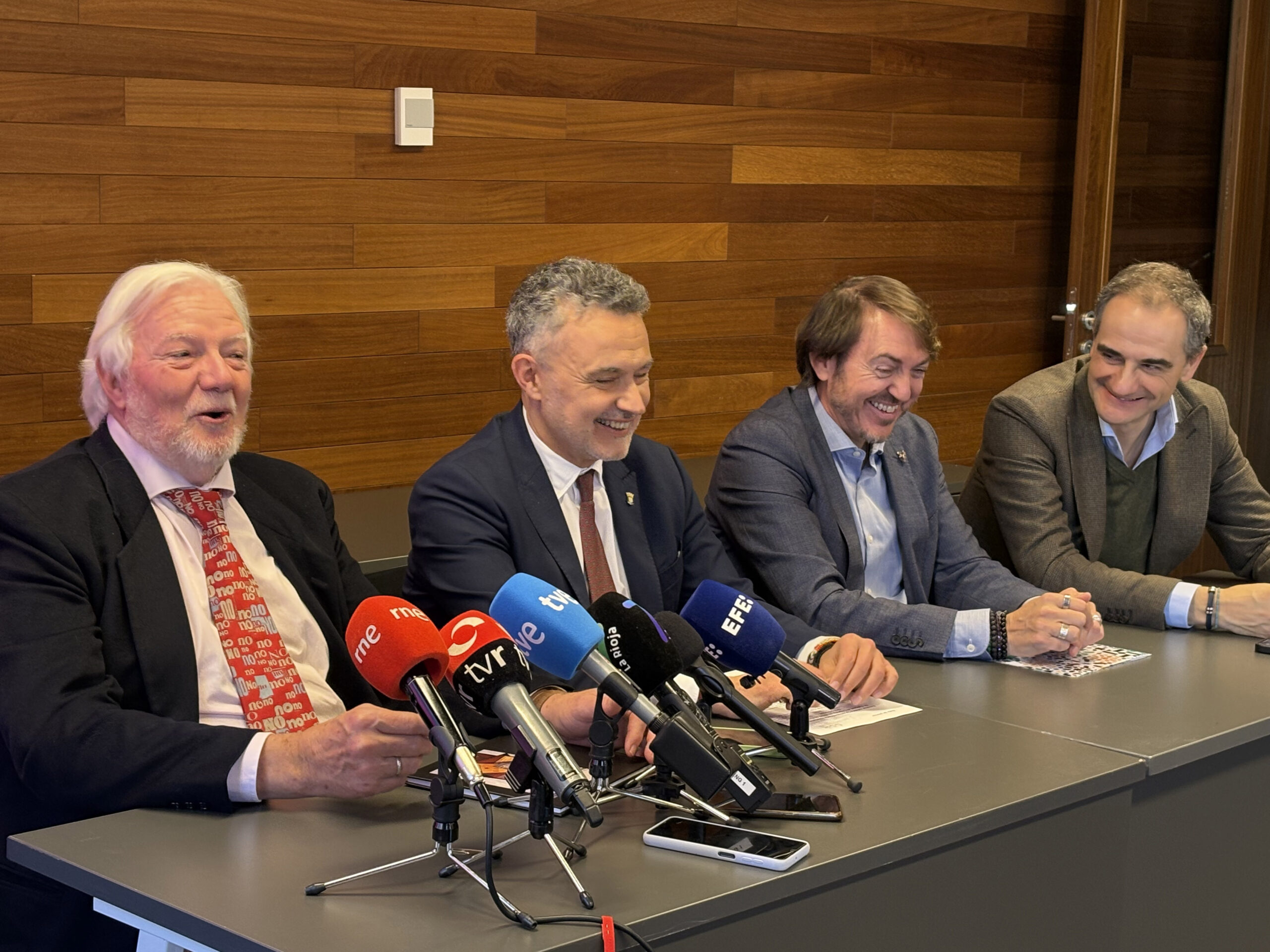
- Santiago Vivanco, president of the Vivanco Foundation and Experiencias Vivanco, hosted the event, which was attended by the Minister of Industry, Trade and Tourism, Reyes Marotothe President of the regional government, Concha Andreuthe UNWTO Secretary-General, Zurab Pololikashvili; the delegate of the Government, María Marrodán; y the Mayoress of Briones, Silvia Gordo.

- After the conclusion of the current World Conference in Alba (Italy), scheduled for 19-21 September, Spain, and specifically La Rioja, will begin designing the programme and theme for the seventh edition in 2023. As is tradition, this Conference is held in the world's major wine regions.

·   El Vivanco Project has been recognised on several occasions by this organisation created in 1974: in 2019 it received from the UNWTO the plaque that accredits the firm commitment of the Family and the Vivanco Foundation with Tourism, Oenology, support for the Rural Environment and the enhancement of the Heritage. And, in 2007, the Vivanco Foundation for Wine Culture was recognised with the Ulysses Award, The award was given for innovation as a Non-Governmental Organisation. 

Briones, 12 July 2022. It will be the first time that Spain, and La Rioja, The World Wine Tourism Conference, the UNWTO's initiative to highlight the importance of wine tourism as a stimulus for the growth of local economies, as a driver of social change and as a promoter of rural areas framed in a cultural and natural environment where the fruit of the vine is much more than a universal beverage: it is the essence and source of life.

The Winery and the Vivanco Museum of Wine Culture, the project of the Vivanco family which since 2004 has changed the way of understanding and promoting wine tourism in Spain, and which for 18 years has been visited by travellers and wine enthusiasts from over fifty countries, was the privileged setting for the official presentation of the 7th UNWTO World Wine Tourism Conference. A hot day, framed between the medieval village of Briones, a bucolic sea of vineyards and the imposing Sierra de Cantabria, which featured the interventions of the Minister of Industry, Trade and Tourism, Reyes Maroto; the President of the Regional Government, Concha Andreu; and the Secretary General of the UNWTO, Zurab Pololikashvili.

The heart of La Rioja opens up to the world

Since the first edition in Kakheti (Georgia) in 2016, the Conference has been held in major wine regions around the world, including Mendoza (Argentina, 2017), Chisinau (Moldova, 2018), Colchagua Valley (Chile, 2019) and Reguengos de Monsaraz (Portugal, 2021). After the closure of the current conference in Alba (Italy) on 21 July, Spain will start work on the 7th UNWTO World Conference on Wine Tourism, to be held in La Rioja and will be attended by more than 500 international experts.

Santiago Vivanco, who has had the privilege of participating as a speaker in the previous Conferences in Georgia, Argentina and Moldova, was the host of the official presentation of this initiative that will increase the visibility of La Rioja at national and international level: a small place that stands out on the oenological map of the five continents, where nature dotted with vineyards and the history of wine beat naturally among the routine of its inhabitants; an environment where varieties are grown that make outstanding wines, appreciated in a multitude of countries and cultures.

The motto of the founder of the Vivanco project, “to give back to wine what wine has given us”.”, yesterday acquired a new nuance by hosting this meeting that highlights the importance of wine tourism as a gastronomic and cultural attraction, as a source of life and prosperity for the regions. A philosophy that, both in the five exhibition halls of the Vivanco Museum of Wine Culture, as well as in the exterior of its 9000 square metres or in the wines of the oenologist Rafael Vivanco, are transformed into an unforgettable experience that has made Vivanco the most visited place in La Rioja. These are just some of the reasons why in May 2019 Zurab Pololikashvili, Secretary General of the World Tourism Organisation, presented a plaque that accredited the firm commitment of the Vivanco Family and Foundation to Tourism, Oenology, support for the Rural Environment and the enhancement of Heritage.. The event took place in a private ceremony in front of the sculpture of Pedro Vivanco Paracuellos, founder of the Vivanco project, the Vivanco Winery and the Vivanco Museum of Wine Culture.. In addition, in May 2007, the UNWTO awarded to the Vivanco Foundation the Ulysses Prize, The Wine Culture Programme was awarded the Special Jury Prize for Innovation in Non-Governmental Organisations for its Wine Culture Programme. Since then, the passion for sharing Wine Culture remains intact.

About the World Tourism Organization (UNWTO) 

The World Tourism Organization (UNWTO) is a body created in 1974 and formally linked to the United Nations since 1976. Its aim is for tourism to contribute to economic growth, inclusive development and environmental sustainability. As an institution, they provide leadership and support to the sector. It has 158 full members, six associate members and more than 500 affiliate members. The latter represent the private sector, educational institutions, tourism associations and local tourism authorities.

UNWTO's priorities include integrating tourism into the global agenda; enhancing tourism competitiveness, promoting sustainable tourism development, boosting tourism's contribution to poverty reduction and development; promoting knowledge, education and training and building partnerships. The UNWTO launches the annual Ulysses Awards for Excellence in the Creation and Dissemination of Knowledge in Tourism. These awards recognise the merits of inspiring individuals and projects for their innovative achievements and their invaluable link to the development and promotion of sustainable tourism in line with the UNWTO Global Code of Ethics for Tourism and the Millennium Development Goals. 

WHAT IS VIVANCO?

Vivanco is his family background. In 2004, the VIVANCO FAMILY decided to realise in Briones, La Rioja, the dream of a lifetime of enthusiasm and dedication: to share his passion for wine culture with the world. With humble beginnings in the vineyard, wine has been the family's lifeblood for four generations and 100 years of work and commitment. With a pioneering spirit and boundless enthusiasm, it was time to share this vocation by giving back to wine all that wine had given them.

Vivanco is much more than wine. A WINERY where wine is understood from a demanding, dynamic and modern point of view. A contemporary oenological project with different and unique wines from the family's vineyards. The authentic expression of a land full of curiosities.

Vivanco is much more than Culture. A FOUNDATION where past and present become one. An exciting journey through knowledge and history, with a unique museum where the essence of wine is discovered through experience, sensitivity and innovation.

Vivanco is much more than Experiences. Vivanco wants to transport the wine lover to a new universe of sensations where the wine itself takes centre stage. A new form of ENOTOURISM with more than 9,000 m² of emotions and activities around culture, art, gastronomy, flavour and fun. The meeting point between knowledge and enjoyment of wine.

Today Vivanco understands wine as a way of life from an innovative and energetic perspective, offering a unique and exclusive experience around the Wine Culture. Winery, Foundation and Experiences are the faithful reflection of the Vivanco Family's commitment to “to give back to the wine what the wine has given them”.

28/10/2022

Vivanco, the only winery in La Rioja awarded among the 50 most amazing winemaking projects in the world, at the World's Best Vineyards ceremony held in Argentina.

- The expected list World's Best Vineyards, which distinguishes from 2019 the 50 most impressive and suggestive wineries and oenological projects from the five continents, thanks to the meticulous selection of an expert jury composed of 500 international and multidisciplinary specialists, was unveiled early this morning, Spanish time, at the ceremony held at Zuccardi Valle de Uco in Mendoza (Argentina), at the foot of the imposing surroundings of the Andes Mountains.

- Santiago Vivanco, president of the Vivanco Foundation, collected this award on behalf of the Vivanco Family, which highlights the artistic and incalculable value of the Museum Vivanco de la Cultura del Vino, recognised by UNESCO in 2007 as the best in the world in its category. A collection that treasures outstanding works of all times, an artistic harmony that completes the oenological and gastronomic experience of the dream that, now in its fourth generation, is shared by this winemaking family from Briones, in the heart of La Rioja.

- Vivanco, located in Briones, La Rioja, ranks 44th among the 50 unique destinations, five of which are Spanish. It is the only winery in this autonomous community to receive an award among those considered unique destinations. Oscars of wine and wine tourism worldwide. All of them are particularly surprising for their geographical location, their architecture, their history, their wine tourism perspective, their gastronomy and, of course, their unique wine-making offer. In short, wineries and experiences that amaze for their way of understanding, feeling and projecting the essence of this millenary beverage. 

Briones (La Rioja), 27 October 2022. This is the third time that the Winery and the Vivanco Museum of Wine Culture have been recognised as one of the 50 most exciting wine experiences on five continents. As was the case in 2019 and 2020, this year's edition of the World's Best Vineyards Top 50 has once again highlighted the uniqueness of the oenological, artistic and experiential offerings of the Vivanco around this beverage with 80 centuries of history. With 44th place on the list, Vivanco is the only winery in La Rioja to receive an award in those considered the best in the world. Oscars wine and wine tourism.

In a ceremony in which projects and wineries from all over the world took part, a marked international character that testifies to the universality of wine, Santiago Vivanco, President of the Vivanco Foundation, has collected at Zuccardi Valle de Uco in Mendoza (Argentina), after a warm spring afternoon, the award promoted by William Reed Business Media, a global company of specialised media and responsible for the famous list The World's 50 Best Restaurants. It is an honour to represent La Rioja in this ceremony. It is always a source of pride that a family project like ours, the dream of four generations dedicated to wine and its culture, is among the 50 best tourism and wine experiences in the world“.

La Rioja, the starting point for dreaming of great destinations

Discovering the world through wine is an excellent pretext, a thread woven with tannins and emotions that weaves together the most diverse countries and cultures, a concept that Vivanco has always defended through its project in Briones, La Rioja. All you have to do is travel through the website www.worldsbestvineyards.com to discover, among the 50 selected, that the seed of wine dreams has taken root in countries such as France, Italy, New Zealand, South Africa, Argentina, Uruguay, Portugal, Germany, the USA, Austria, Greece, Australia and Chile. Sometimes we owe the reason for the seduction to a landscape, to a gastronomic experience thanks to internationally renowned chefs or to a room where the rest is restful and the views are unique. Others, to the avant-garde architecture of a signature building, to the pioneering vision of a small winemaking family or to an outstanding work of art. Sometimes, good ideas can be found amidst the rattle of a vintage horse-drawn carriage or during a bike ride, or on foot, amidst the stillness of unique vineyards.

And sometimes our next destination, the magical, unexpected one, is much closer than we think. This is the case of the Vivanco Winery and Museum of Wine Culture, located in Briones, La Rioja, a small medieval village listed as one of the most beautiful places in Spain. Vivanco, whose roots are located at the foot of the Sierra de Cantabria, has great attributes and those little details that make the wine experience a memorable one. 

On the one hand, the Vivanco Family has collected over almost half a century an artistic and ethnographic collection that gives shape to the five exhibition rooms of the Vivanco Museum of Wine Culture: from millenary pieces, such as those that bear witness to the splendour of ancient Egypt, to one of the largest collections of corkscrews in the world on public display (more than 3,500 devices), as well as works of art signed by Durero, Chagall, Picasso, Sorolla, Andy Warhol and Miró. On the other, an Ampelographic Garden that preserves more than 200 varieties of vines from the five continents, strategically located between sculptures and the peace and quiet of 9000 square metres that adjoin an estate, under the Sierra de Cantabria, where every day the vines are cared for and whose fruit gives body to unique and internationally awarded wines. 

In addition to the Wine Documentation Centre and the panoramic Restaurant, whose exquisite gastronomic proposal is served with views of the vineyard, the glassed-in cellar stands out, housing the imposing French oak vat room and other underground corners where the constant temperature and dim light caress the barrels where Vivanco Crianza and Vivanco Reserva age, the outstanding wines of the Vivanco Collection and the new innovative projects of winemaker Rafael Vivanco, and the dim light caress the barrels where Vivanco Crianza and Vivanco Reserva, the outstanding wines of the Vivanco Collection and the new innovative projects of the winemaker Rafael Vivanco, the sparkling wines of Rioja and his new municipal wine, Vivanco Brunes, are aged: small luxuries for the palate that involve arduous research work on Rioja varieties, some of which are almost extinct.

The difficult requirements to be part of the list World's Best Vineyards

It is not easy for a visit to a vineyard to become an experience that will last in your memories, a valuable moment that is one hundred percent recommendable, with your eyes closed, or that place in the world to go to, if you could, once in a lifetime. Landscape, innovation, reputation, accessibility, quality, quality, creativity, history, gastronomic offerings, pampering, architecture, select service, personality... these are some of the qualities evaluated by the nearly 500 members of the international jury made up of wine experts, sommeliers and journalists specialising in luxury travel and wine tourism. 

The process leading up to the final result is very demanding.The World's Best Vineyards list and awards, organised and compiled by William Reed Business Media, is compiled from the votes of The World's Best Vineyards Academy. To create the Academy, the world is divided into 22 regions, each with a Chair at the head. The Chair of the Academy is responsible for recruiting 36 voters who represent the region and who, incidentally, change annually by at least 25% to ensure fresh perspectives. Each can cast 7 votes.

In addition to being independent, the jury must remain anonymous with respect to being part of the World's Best Vineyard Voting Academy and must not discuss their voting selections with other members. In addition to having visited the vineyards they are voting for since 1 January 2016, they must submit 7 nominations in order of preference based on the experience in the vineyard, not the winemaker. In addition to being projects open to the public, they must confirm that they do not work or have a financial interest in their selection. 

WHAT IS VIVANCO?

Vivanco is his family background. In 2004, the VIVANCO FAMILY decided to realise in Briones, La Rioja, the dream of a lifetime of enthusiasm and dedication: to share his passion for wine culture with the world. With humble beginnings in the vineyard, wine has been the family's lifeblood for four generations and 100 years of work and commitment. With a pioneering spirit and boundless enthusiasm, it was time to share this vocation by giving back to wine all that wine had given them.

Vivanco is much more than wine. A WINERY where wine is understood from a demanding, dynamic and modern point of view. A contemporary oenological project with different and unique wines from the family's vineyards. The authentic expression of a land full of curiosities.

Vivanco is much more than Culture. A FOUNDATION where past and present become one. An exciting journey through knowledge and history, with a unique museum where the essence of wine is discovered through experience, sensitivity and innovation.

Vivanco is much more than Experiences. Vivanco wants to transport the wine lover to a new universe of sensations where the wine itself takes centre stage. A new way of ENOTOURISM with more than 9,000 m² of emotions and activities around culture, art, gastronomy, flavour and fun. The meeting point between knowledge and enjoyment of wine.

Today Vivanco understands wine as a way of life from an innovative and energetic perspective, offering a unique and exclusive experience around Wine Culture. Winery, Foundation and Experiences are the faithful reflection of the commitment of the Vivanco Family for “to give back to the wine what the wine has given them”.

25/01/2023

One of Bodegas Vivanco's latest harvests: today, 25th January, the winter paradox of its sweet wine begins.

- The dehydrated bunches of Tempranillo, Graciano, Garnacha and Mazuelo grapes, which are literally hanging by a thread, were harvested today, 25 January. From the early hours of the morning, when the minimum temperature was 0ºC and the north-westerly wind was blowing at an average of 13 km/hour, a team of 30 grape harvesters carried out this careful late harvest in which the grapes have a weight that, depending on the variety, ranges from 20% to 40 % of the original.

- Although this manual harvest takes place between December and January, depending on the state of the grapes and the inclement weather, this year's harvest was one of the latest in the history of Bodegas Vivanco. This atypical event took place at Finca El Cantillo, in the still snow-covered vineyards protected by the Sierra de Cantabria mountain range that surrounds the Winery and the Vivanco Museum of Wine Culture.

·       Vivanco 4 Varietal Sweet Winter Collection, a delicious limited edition wine that is highly coveted in the market, recovers the tradition of Rioja's supurados wines. Made with a 40% of Garnacha, a 40% of Mazuelo and a 10% of Graciano and Tempranillo. A nod to the past, to the time when winegrowers used to store the grapes they consumed at Christmas in the attics of their houses. The leftover bunches were pressed and subjected to a fermentation process.

- After 14 months in French oak barrels, Vivanco 4 Varietal Sweet Winter Collection increases in complexity during its bottle ageing, which lasts six months. It stands out for its intense and very pleasant aromas of candied fruit, peach apricots, candied orange and quince jam, all surrounded by elegant floral notes and cocoa. In the mouth it is sensual, delicate, with a fine fruity sweetness, very fresh and integrated, which makes it a long, tasty and pleasant wine. It is ideal to enjoy with strong cheeses, foie, cold seafood and all kinds of cakes, sweets and seasonal fruits. 


25 January 2023. Briones, La Rioja. Under a leaden sky, a north-westerly wind blowing at an average speed of 13 km per hour and a temperature that ranged between 0º minimum and 5º maximum, the image of the winter harvest at Finca el Cantillo (a name that pays homage to the boulders in the vineyard that preserve the heat so well during the summer nights) was repeated once again this year. Paradoxically, if the high temperatures of the summer forced the harvest to be brought forward, this winter harvest, with the remains of snow in the vineyard, was one of the latest in the history of Bodegas Vivanco. The 25th of January was the day chosen for this meticulous task in which the weather had to be just right: far from the squalls that would wet the fruit and affect the wine, far from the gales that would shamelessly throw the dehydrated fruit to the ground, as happened in the past with a cyclogenesis.

The mathematics of this Winter Sweet

Months away from the summer heat or the chromatic tapestry of the vineyard in autumn, the late harvest needs the harmony of winter. The cold, clear skies and the ghostly (and beautiful) mists so characteristic of this part of La Rioja Alta are the necessary ingredients for this iconic wine of Bodegas Vivanco. In fact, the morning mists, thanks to the proximity of the Ebro River, together with the good drainage of the soil and the cold, dry Cierzo wind, result in the slow development of the noble rot (fungus Botrytis cinerea) in the grapes, which increases the aromatic complexity, sugar concentration and acidity of the future wine.

Vivanco 4 Varietal Sweet Winter Collection is one of the bets of Rafael Vivanco, oenologist of Vivanco Wineries, which, since 2009, has been looking back to the past to rescue the almost disappeared traditional sweet wines from La Rioja. From nostalgia, from that yesterday that teaches us so much, from the love rooted in the land, this naturally sweet wine is born, whose delicate, elegant and personal taste needs neither alcohol nor added sugars. Each sip of this sweet wine is reminiscent of the time when winegrowers used to store part of the grapes on the top of their houses. So that they could be consumed at Christmas, the ripest grapes were reserved, with the loosest berries which, after several months, were dehydrated.The grapes were eaten as sultanas and the leftover bunches were pressed and fermented in demijohns or other containers. After several months, a wine with a high residual sugar content was obtained. Sweet and fresh, due to the acidity it retained, it became the dessert drink of the festive days or as a medicinal wine, due to its high value as a restorative.

The research carried out by Rafael Vivanco and his team over the years, adds to the wisdom of yesteryear the innovation of the present, the knowledge of the microclimatic and soil conditions of the Finca El Cantillo vineyard in Briones and the behaviour of each variety. In fact, one of the curiosities of this late harvest is the weight that each type of grape loses over time. In the case of Tempranillo and Graciano, it is reduced by 75% and, as for Garnacha and Mazuelo, the loss is 60%. To this must be added the low yield of juice. Mathematics, therefore, do not fail in the vineyard: compared to other Bodegas Vivanco wines, to produce Vivanco 4 Varietal Sweet Winter Collection the grapes needed must be multiplied by a factor of ten. The result of this wine, which is presented in a limited edition of no more than 2,000 bottles of 37.5 cl., is surprising. Complex on the nose and tasty on the palate, it is a pleasure to be able to enjoy it every day of the year and, of course, on a Christmas evening or with a Roscón de Reyes on 6 January.

About Vivanco 4 Varietal Sweet Winter Collection

This late winter hand harvest is the start of a process that will culminate in a new vintage of Vivanco 4 Varietal Sweet Winter Collection. Each of the four grape varieties that make up this particular coupage are harvested separately. The botrytised fruit, with very low yields due to dehydration (the characteristic that will mark its personality), is placed in small 10-kilogram boxes. After a long, gentle pressing, the must is obtained and fermented for a month and a half in French oak barrels. Afterwards, the wine rests for twelve months in barrels of the same oak, of different cooperages, toasting and origins. Each of the wines remains on its fine lees until bottling. After bâtonnage In the first few months, the wines are refined for almost a year in the bottle, where they gain complexity, as is the case with other world-famous sweet wines such as Sauternes in Bordeaux (France) and Tokay in Hungary.

Pale orange in colour, clean and bright, with intense and very pleasant aromas of candied fruit, peach apricots, candied orange and quince jelly, all surrounded by elegant floral notes and cocoa. In the mouth it is sensual, delicate, with a fine fruity sweetness that is very fresh and integrated, making it a long, tasty and pleasant wine.

To enjoy it at its best, it should be served and tasted between 10 and 12°C. At this temperature, it unfolds its full balance of aromas, fine sweetness and freshness. At this temperature it unfolds its full balance of aromas, its fine sweetness and freshness. It is an ideal wine to enjoy as an aperitif, on its own, or with foie gras or strong cheeses (Roquefort, Cabrales...). It surprises with cold seafood, such as oysters or lobsters, and is a great accompaniment as a dessert wine with all kinds of cakes, sweets and seasonal fruits. It is also recommended as an after-dinner wine for pleasant conversation. At Christmas. And always.

WHAT IS VIVANCO?

Vivanco is his family background. In 2004, the VIVANCO FAMILY decided to realise in Briones, La Rioja, the dream of a lifetime of enthusiasm and dedication: to share his passion for wine culture with the world. With humble beginnings in the vineyard, wine has been the family's lifeblood for four generations and 100 years of work and commitment. With a pioneering spirit and boundless enthusiasm, it was time to share this vocation by giving back to wine all that wine had given them.

Vivanco is much more than wine. A WINERY where wine is understood from a demanding, dynamic and modern point of view. A contemporary oenological project with different and unique wines from the family's vineyards. The authentic expression of a land full of curiosities.

Vivanco is much more than Culture. A FOUNDATION where past and present become one. An exciting journey through knowledge and history, with a unique museum where the essence of wine is discovered through experience, sensitivity and innovation.

Vivanco is much more than Experiences. Vivanco wants to transport the wine lover to a new universe of sensations where the wine itself takes centre stage. A new way of ENOTOURISM with more than 9,000 m² of emotions and activities around culture, art, gastronomy, flavour and fun. The meeting point between knowledge and enjoyment of wine.

Today Vivanco understands wine as a way of life from an innovative and energetic perspective, offering a unique and exclusive experience around the Culture of Wine. Winery, Foundation and Experiences are a true reflection of the commitment of the Family. Vivanco for “to give back to the wine what the wine has given them”.

PREVIOUS EXPOSURE

On life and wine: Angélica Sáenz

As part of the tribute that Santiago and Rafael Vivanco have wanted to show to their mother, our 20th anniversary bears the name of Angélica Sáenz through an unpublished and free temporary exhibition that now heads the Vivanco Museum. “De la vida y el vino” brings together a series of works that Angélica has been creating during these years of life linked to the world of wine, contributing an artistic vision to this family journey. This is a tribute to the artistic roots of the Vivanco family, which have been a fundamental pillar in the cultural work that the winery has carried out over the years and for which it is internationally renowned. 

CURRENT EXHIBITION

New World Order, by Óscar Vautherin

Bodegas Vivanco presents a new temporary exhibition by Óscar Vautherin, author of the outdoor work that presides over the winery's garden. “New World Order” can be visited from 29 October as part of the activities organised by the winery to celebrate the grape harvest..

The exhibition “New World Order” brings together 7 works by the author which complement the existing work Gracias Madre 2021, where the vine, the source of the earth's blood, which imbues everything it touches with life, becomes the protagonist of his gaze. This is how he conceives these fauns that emerge from the heart of the winery to conquer the world. These “tripatas”, which ally the Earth, the plant and man, charged with intention in movement, sink to the ground like milestones that freeze time and trap the gaze, giving us the time to contemplate and be grateful for life. Together with Gracias Madre 2021, the exhibition is expanded with the addition of:

  • Golgotha 2025, where he claims that when there is no one left, the land will still be there.
  • Mercy 2003, is a wood carving and large-format photograph.
  • No country for old people 2021, made from wood, iron, esparto grass, plaster, paint and cables. It depicts a woman with two children playing at sorting out the trail of wood shavings and fragments on the floor.
  • Ink drawings 2019- 2020, The 36 drawings of living vines at different times and stages of development. 36 ways of approaching a vine from the drawing.
  • Sun Salutation 2023, a piece with a lot of movement that represents a bull. Not only as an exercise in spatial resolution and anatomy of the animal, but also to bring in another part that is affected by the new measures that are damaging natural resources.
  • No turning back 2024 - 25, is a piece created on the façade of the winery, the most visible of them all. It represents a scrapped flag of Europe that starts from one of the main façades and enters into dialogue with a table on which there are two trees, a simile with “that plate” that we are forced to serve now and that is destroying agriculture. 
Skip to content