Often, the first contact we have with a wine is through the observation of its bottle and its labelling in a sales area. That is why the labels and back labels of the bottles gather a great amount of very varied information, since they work as letter of presentation of the wine. This information can help us to get an idea, more or less approximate, of the type of wine we are buying. what the wine is going to be like before we can taste it. Thus, among other information, we will have a reference of its quality, its production process or its origin. And the more information we have and the more precise it is, the easier it will be for us to choose the perfect wine for each occasion. That is why today we are going to learn how we can decipher everything that a bottle of wine tells us before opening itThe best way to choose a wine is through the information provided by the labels.
What information do wine bottle labels give us?
Wine labels offer us more and more information about the fundamental characteristics of the origin and production of the wine, legal data, descriptive aspects or consumption recommendations. Some of this information must be reflected in a compulsory way by the wine producer in order to comply with the legal requirements for sale. Others offer us useful information in order to know a little better the personality that a wine is going to present once we open the bottle. Here are some of them, we will review all the information that we can extract from the label of a bottle of wine..

Mandatory data on a wine label
Name or trademark of the wine
This is the name or brand under which the wine is marketed. As well as being legal information, it serves as a reference to give us an idea of the quality we can expect from a wine. If we have liked a wine, it will be the main piece of information we should keep.
Producer
In addition to the name of the wine, the label should reflect the name or company name of the producer and/or bottling company, as this information does not necessarily have to coincide with the brand information. As in the previous section, the prestige of a renowned producer can serve as a guide to foresee the quality that a wine may present.
Origin of grapes and place of winemaking
The label also provides us with information about the country of origin of the grapes from which a wine has been made, as well as the place where production took place. If we know the characteristics of the region of origin, with this information we could anticipate some of the qualities that will make up the personality of a wine.
Designation of Origin
If the wine belongs to a Designation of Origin, this information must also appear on the label. In addition, the seal of the Regulatory Council of the corresponding Designation of Origin will also appear on the label or on the back label of the bottle. This provides information about the characteristics of the wine according to the requirements set by each Regulatory Council: type of grape or grapes permitted for production, percentages of each variety, winemaking processes, winemaking times, and the time required to produce the wine. crianza, quality standards, etc.
Add
It reflects the year of harvest of the grapes used to make the wine. As we already know, the vintage can determine the quality of a wine depending on the climate of that year, the production conditions, etc. This information will also be very useful for us to know the optimum moment for the consumption of the wine, the point at which it has reached the end of its evolution in the bottle.
In general, for white and rosé wines, this time will be within the first year after the harvest. For young reds, we can extend this time to the second year. For red wines with crianza, the duration can be extended for several years. For reference, the ideal moment for the evolution of a wine with crianza is usually when it has been in the bottle for a similar length of time as it has spent in the barrel.. However, this may vary depending on the producer, so it is always best to consult their consumption recommendations.
Volume of alcohol
The label on wine bottles also states the alcohol content of the bottle, expressed as a percentage of the total. This content will be between 12% and 14% in most cases. With this information, we can get an idea of how unctuous or full-bodied a wine will be: the higher the alcohol content, the more full-bodied it will be.
Lot number
Important for product tracking and traceability, especially for health control purposes.
Presence of sulphites
If a wine has a sulphite concentration equal to or higher than 10 milligrams per litre, this should be reflected on its labels in order to avoid allergy problems.
Bottle capacity
Expressed in millilitres or centilitres, the capacity of the bottle is The most common capacity of wine bottles is usually 75 cl., although we can find other types of bottles on the market.
Information on packaging recycling
It clarifies how we should proceed in order to facilitate the processing of the packaging, recycling or disposal of the packaging (glass recycling).
Category according to sugar concentration (in sparkling wines)
In the case of sparkling wines, the label must reflect their category based on the quantity and type of sugars they contain. Thus, we will talk about sweet wines, semi-dry, dry, extra dry, brut nature, brut, extra brut, etc.

Other information we can find
Maturation
It will indicate the time and aging process to which an crianza wine has been subjected. Normally the length of the aging process is indicated by the terms crianza, reserva and gran reserva. The exact crianza times in months can also be specified, since the times associated with the above concepts may vary for each Denomination of Origin, country of production, etc.
Grape variety(ies)
It will indicate whether a wine is a single varietal or whether it is a blended wine in which different varieties have been used in its production. Knowing the characteristics of each variety, we will be able to anticipate the organoleptic characteristics that we will find in the wine: greenness, acidity, sweetness, colour, etc.
Description and tasting notes
It is becoming more and more common for wine labelling to include additional information about the winery, the production method, the awards a wine has won and even a description of the wine including a brief tasting note: aromas, nuances, behaviour in the mouth, etc. This information can be very useful when it comes to choosing one wine or another, although we must bear in mind that there can always be a component of persuasion in these descriptions.
Serving and pairing recommendations
Each wine is different and nobody knows its characteristics better than the person who has produced it. That is why the serving and pairing recommendations The winery's recommendations can be fundamental when it comes to choosing a wine. Suggestions for presentation and service, ideal serving temperatureRecommended food and dishes to accompany the wine in question, etc.
Wine labels Vivanco
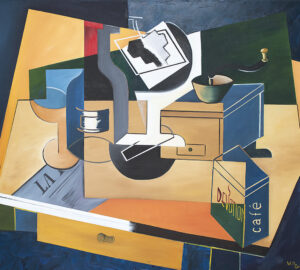
In addition to all the legal and practical information for the consumer, wine bottle labels are a fundamental part of wine packaging. packaging of the product. Therefore, they should reflect the fundamental aspects of the personality of a winery and its wines. In this way, at Vivanco we have tried to ensure that the labels of our wines reflect our passion for the Wine Culture, reflecting works of art in them.by reflecting on them works of art belonging to the collections of the Vivanco Museum of Wine Culture. Works such as Le Troubadorby Joan Miró or Still Lifeby Juan Gris, dress our Vivanco Crianza and Vivanco Reserva bottles, designed exclusively from an original 18th century bottle that is also part of the Museum's collection. This inspiration in art can also be seen in the labels of the Vivanco Collection wines, in those of our young wines, in those of Vivanco Viura-Malvasía-Tempranillo white wines or in the labels of the Vivanco Tempranillo-Garnacha rosé.

We invite you to get to know them all and to experiment with our proposal. A way for each bottle of wine Vivanco to contain a small work of art, both inside and out.